New Jersey to New York real estate license transfer: no reciprocity, and the waiver is not automatic
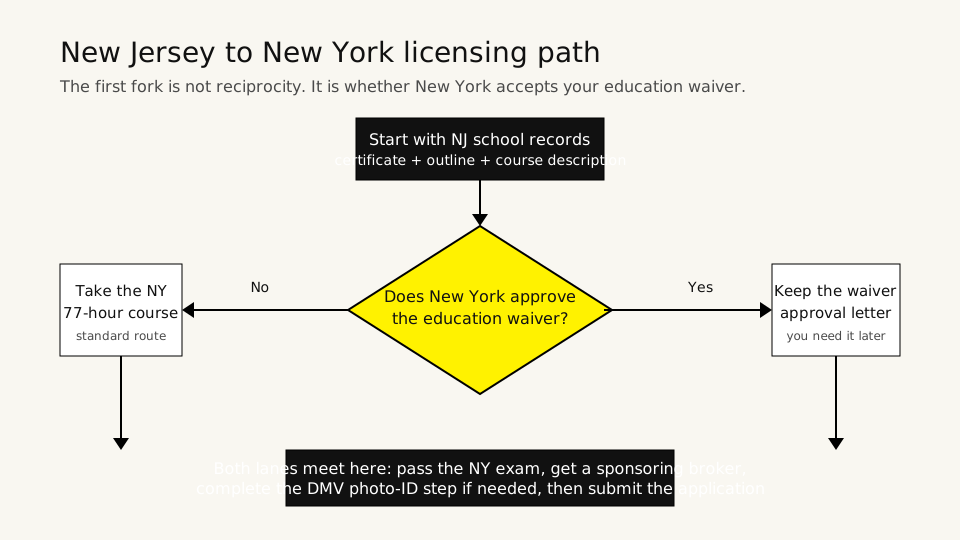
If you hold a New Jersey real estate license, New York is not going to transfer it over. New York says it has no reciprocity with any other state. Your best shot is an education-waiver request using your New Jersey course records; if that waiver is approved, you still need to pass the New York salesperson exam, get sponsored by a New York broker, handle the New York DMV photo-ID step, and submit the application. If the waiver is denied, you are taking New York’s 77-hour course.
Need the broader map first? Start with our real estate reciprocity guide. If you only expect the occasional Manhattan or Westchester referral, read reciprocity vs portability before you spend money. If you also work the other direction, our New York to New Jersey transfer guide shows how different this border gets once New Jersey is the destination.
New York does not have a fast reciprocity lane here
This is the part that trips up a lot of New Jersey agents. New York’s FAQ says the Department of State “does not currently have reciprocity with any other state.” That means there is no special New Jersey law exam, no clean border-state shortcut, and no version of “just send your current license and a check.”
What New York does allow is a written waiver request for education completed outside New York. That is a very different thing.
The state says you must send a written request, proof that you finished the prelicensing course, a detailed outline showing topics and hours, and a course description. Home-study and correspondence courses do not count. New York also says the prelicensing salesperson course used for a waiver must be at least 77 hours of classroom instruction.
That last part is the snag. New Jersey’s standard salesperson requirement is 75 hours. So if all you have is the basic New Jersey school certificate and nothing else, do not treat the waiver like a guaranteed yes. Treat it like a review request.
The only real shortcut is a clean waiver packet
If you want to save time here, the move is not calling ten brokerages first. The move is getting your school paperwork in order before you do anything else.
New York’s salesperson application instructions say outside-state applicants should send the waiver materials to the Bureau of Educational Standards first. After approval, the Department tells you how to register for the exam. Once you pass, you mail the paper application, the original waiver letter, and the fee.
That order matters.
If you try to skip ahead, you end up with the same dead-end a lot of tri-state agents complain about: a current New Jersey license, no New York approval letter, and no clean answer on whether your prior course work will count.
My practical take: call the exact school that issued your New Jersey certificate and ask for three things in one request:
- Your original or duplicate course completion certificate or transcript.
- A detailed syllabus or outline showing topics covered and the hours attached to each section.
- The catalog description for the course you completed.
If the school cannot produce that packet, stop pretending the waiver is your plan. At that point, the safer assumption is that you will need New York’s 77-hour course.
The exact New Jersey to New York process
1. Gather the school documents before you worry about the exam
New York wants course records, not just proof that you have been licensed in New Jersey. That means your first call is usually to the school, not the New Jersey commission.
This is where people lose a week for no reason. They chase a reciprocity rule that does not exist instead of building the waiver packet New York actually asks for.
2. Mail the waiver request to New York’s Bureau of Educational Standards
The Department’s salesperson application instructions tell outside-state applicants to mail the waiver request, certificate or transcript, and course description to the Bureau of Educational Standards in Albany. Do this before you schedule anything else.
If New York approves the waiver, keep that letter like cash. You need the original waiver letter again when you submit the license application after passing the exam.
If New York denies the waiver, the path gets simple, even if it gets longer: take the 77-hour New York course and move forward the standard way.
3. Create the eAccessNY account and take the New York exam
New York requires salesperson applicants to schedule the written exam through eAccessNY. The current written-exam fee is $15, and the Department gives you 1 1/2 hours to finish.
Do not confuse this with New Jersey’s PSI setup. This is a different system, a different curriculum, and a different state-law emphasis. If you have not looked at New York agency, fair-housing, and disclosure rules in a while, spend time in our state portion exam prep guide before you book the seat.
4. Handle the photo-ID trap and line up a sponsoring broker
New York also has a step that out-of-state agents regularly miss. If you do not already have a New York driver license or non-driver ID, the Department says you must visit a New York DMV office to have your picture taken. DMV gives you an FS-6T receipt with the 9-digit ID number the Department needs.
Then there is the broker issue. New York is explicit that a salesperson cannot operate independently. You need a New York sponsoring broker before the license can go active.
So the clean sequence is:
- get the waiver answer,
- pass the exam,
- handle the DMV image-capture step if needed,
- and have the broker ready before the application goes in.
5. Submit the application the New York way
For waiver applicants, New York says the salesperson application must be submitted to the Licensing office for processing after you pass the exam. The current initial application fee is $65, and your passed exam result is valid for two years.
That paper-application rule is easy to miss because normal first-time applicants can handle more of the process online. Waiver applicants cannot treat this like a standard click-through application.
What it costs
Here is the cleanest budget for the New York side.
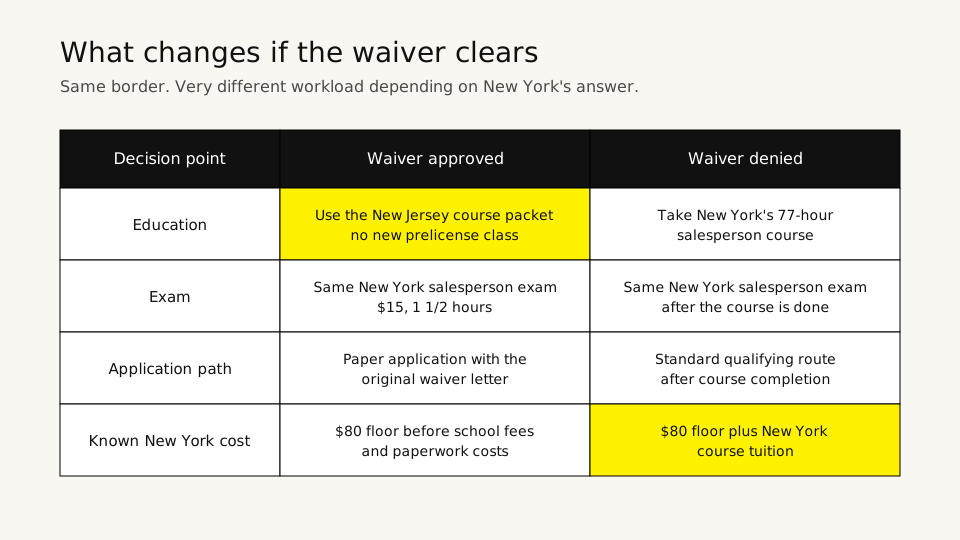
| Item | Cost |
|---|---|
| New York salesperson exam | $15 |
| New York initial salesperson application | $65 |
| New York DMV image-capture step | No fee if you only need the photo capture |
| New Jersey duplicate course records or school packet | Varies by school |
| New York 77-hour course | Only if the waiver is denied |
| Known New York floor before school fees or course tuition | $80 |
That $80 floor is better than a full restart, but only if the waiver clears. If it does not, the real expense becomes course tuition and the extra time. For a bigger picture on destination-state costs, use the 50-state fee calculator.
Why this corridor matters
The 2024 American Community Survey estimated that 36,002 people moved from New Jersey to New York in a single year. Another 56,799 moved the other direction.
That is not a tiny commuter edge case. It is a live corridor. Hudson County clients buy in Manhattan and Westchester. New Jersey families move into the city for work. Longtime New Yorkers cross back over the river and then come calling again when the next move hits.
That is why this license question keeps coming up. It is not about collecting another pocket card. It is about whether you want to keep a share of those clients once their next deal happens on the New York side.
Your next move is straightforward. Call the New Jersey school that issued your course certificate and see whether it can produce the detailed outline New York wants. If it can, file the waiver request now. If it cannot, stop waiting for reciprocity to appear and enroll in the New York course.