Reciprocity vs portability: can I show a house in a neighboring state?
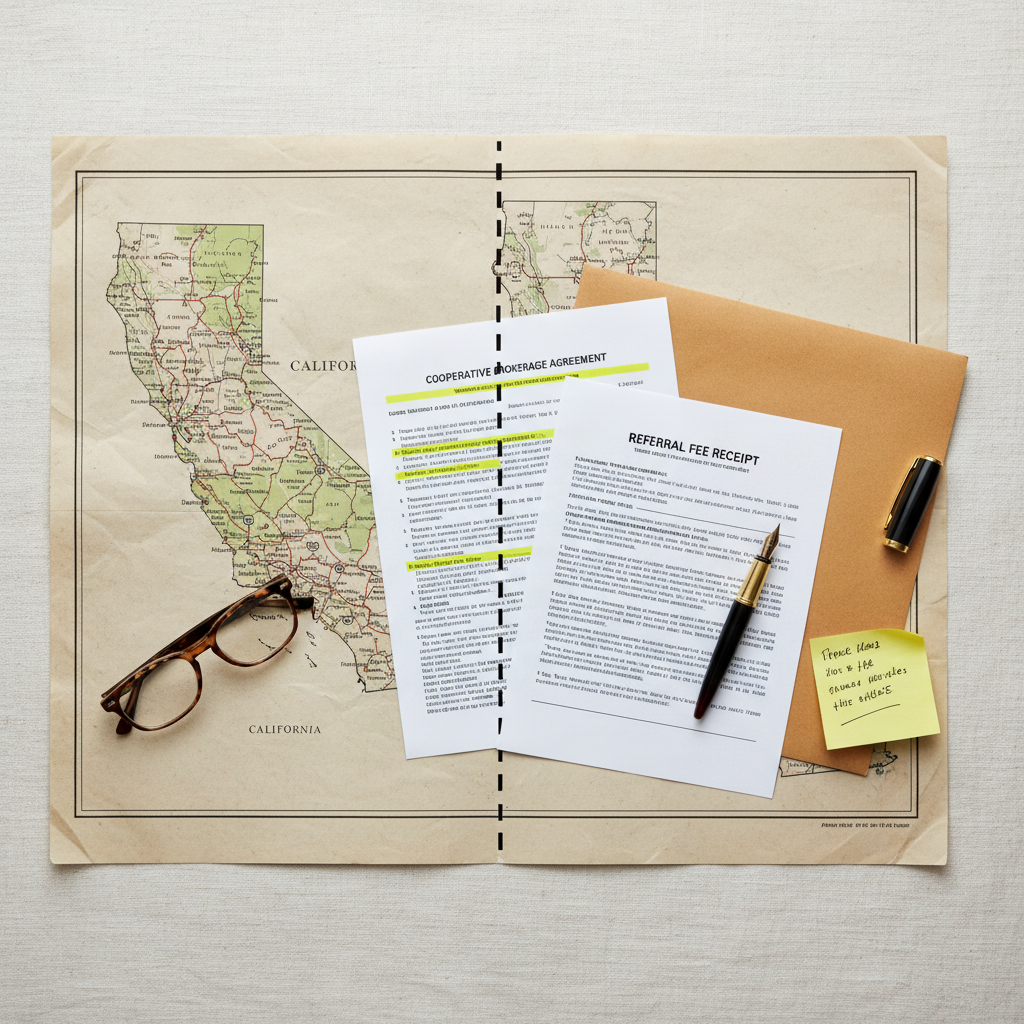
You’re a licensed agent in New Jersey. Your client calls and says they found a house in Pennsylvania they want to see this weekend. Can you show it to them?
The short answer: maybe. It depends on what “show it” means, what you do during and after the showing, and which states are involved. The long answer is the difference between reciprocity, portability, and co-brokerage — three terms the industry uses loosely but the law treats very differently.
Before you drive across a state line with a lockbox code, you need to know where the line is between “helpful agent” and “unlicensed practice of real estate.”
Reciprocity vs portability: they’re not the same thing
Reciprocity is about getting a license. If State B has a reciprocity agreement with State A, it means you can get a State B license through a streamlined process — maybe skipping the national exam, maybe avoiding some coursework, maybe just paying a fee and filing an application. You end up with two licenses: one in State A and one in State B. Both states recognize you as a licensed agent.
Portability is about doing work. It’s the ability to conduct a real estate transaction in another state without holding a license there — temporarily, under specific conditions, with guardrails. Not every state allows it, and the states that do have very different rules about what you can and can’t do.
The confusion happens because people use these words interchangeably. An agent says “I have reciprocity with Pennsylvania” when they mean “I can do a deal in Pennsylvania under their portability rules.” Those are legally different situations with different risks.
For a full breakdown of reciprocity agreements by state, see our reciprocity guide. This article focuses on portability — specifically, what you can do across state lines without a second license.
The three types of portability
NAR (the National Association of Realtors) categorizes state portability laws into three buckets:
Cooperative states
Cooperative portability is the most permissive. A cooperative state lets an out-of-state agent come in, work with clients, and earn a commission — as long as they partner with a broker who’s licensed in that state. You don’t get your own license there. You work under a cooperative agreement with a local broker, and the transaction flows through their brokerage.
Think of it as a guest pass. You can play the course, but you need a member to sign you in.
The D.C./Maryland/Virginia market is a classic example. Agents in the DMV area routinely work across all three jurisdictions using cooperative arrangements. An agent licensed in Virginia can show homes in Maryland and participate in negotiations, provided they’re cooperating with a Maryland-licensed broker. The client stays with you, and the commission is split between the brokerages per their agreement.
Physical location states
Physical location states add a geographic restriction. You can represent your client in a transaction across the border, but you have to do it remotely. You can’t physically be in the other state while conducting business there.
Yes, this sounds absurd. It is a little absurd. But here’s how it works in practice: your New York client is buying a vacation home in a physical location state. You can handle the paperwork, coordinate with the listing agent, manage the negotiation, and earn your commission — all from your office in New York. You just can’t drive to the property, hold an open house, or sit at the closing table in person.
Physical location rules are a compromise. The state wants to regulate who’s physically practicing real estate on their turf, but they recognize that agents advise clients on out-of-state purchases all the time. The solution: do whatever you want from your home state, just don’t set foot in ours while doing it.
Turf states
Turf states are the strictest. If a state has turf rules, you need a license there to do any real estate work involving property in that state. Full stop. You can’t show homes, you can’t negotiate, you can’t write contracts, you can’t attend closings. The only thing you can do is refer your client to a licensed agent in that state and collect a referral fee.
Some turf states will let you accompany a client to a showing as a “friend” — not as their agent. But you cannot provide professional advice, negotiate on their behalf, or perform any activity that constitutes the practice of real estate. If a licensing board finds out you were acting as an agent without a license in a turf state, you’re looking at fines, and your home state licensing board may take action against your original license too.
What you can always do (and what you absolutely can’t)
Regardless of the portability category, some things are universally safe and some are universally off-limits.
You can always:
- Refer a client to a licensed agent in another state and collect a referral fee (typically 25-35% of the cooperating agent’s commission)
- Advise your client generally about a market without performing licensed activities
- Coordinate with agents in other states on behalf of your client, as long as you’re not conducting the transaction yourself
You can never (without a license in that state):
- List a property for sale
- Negotiate contract terms on your client’s behalf at the transaction table
- Write or present purchase agreements
- Host open houses or broker tours
- Represent yourself as a licensed agent in that state
- Advertise your services in that state
The gray zone — showing a property, attending an inspection, being present at closing — is where it gets state-specific. Always check the destination state’s rules before you show up.
Border market examples
Here’s how this plays out in three of the busiest cross-border real estate markets:
New York / New Jersey
New York agents working the NYC metro area regularly have clients looking at homes in northern New Jersey and vice versa. New Jersey allows cooperative arrangements — a New York agent can participate in a New Jersey transaction by working under a cooperative agreement with a New Jersey-licensed broker. This is one of the smoother cross-border markets because both states and their brokerages have decades of practice working this way.
The key: you need a written cooperative agreement between your brokerage and a New Jersey brokerage before you start conducting business. Don’t show up to a listing in Bergen County and figure it out later.
D.C. / Maryland / Virginia
The DMV market is one of the most fluid in the country. Agents routinely work across all three jurisdictions. All three allow some form of cooperative practice, though the specifics differ. Virginia is the most permissive of the three. D.C. has its own licensing board with its own quirks.
Many agents in this market hold licenses in all three jurisdictions specifically because the reciprocity process between them is relatively streamlined. If you’re doing volume in the DMV, the cost and time to get licensed in all three is worth it compared to the complexity of managing cooperative agreements on every transaction.
Chicago / Indiana
Illinois agents working the south side of the Chicago metro often have clients looking at homes across the Indiana border (Crown Point, Valparaiso, etc.). Indiana’s portability rules allow cooperative practice, but the practical challenge is finding an Indiana broker who’s set up for it. Smaller markets don’t have the same infrastructure of cross-border cooperation that the DMV or NYC metro areas do.
If you only do one or two Indiana deals a year, a referral arrangement is simpler and less risky than trying to set up cooperative brokerage agreements.
The risk of getting it wrong
Working across state lines without proper licensing or a valid portability arrangement isn’t just a theoretical risk. State licensing boards investigate complaints, and competing agents are often the ones who file them.
Fines. Most states treat unlicensed practice of real estate as a misdemeanor or civil violation. Fines range from $1,000 to $25,000 per violation, depending on the state.
Home state consequences. This is the part most agents don’t think about. If State B catches you practicing without a license, State B reports it to State A (your home state). State A’s licensing board may then suspend, revoke, or put conditions on your home license. One illegal showing in a neighboring state can cost you your license everywhere.
Transaction risk. If a transaction closes and the state later determines that one of the agents wasn’t properly licensed, the commission can be clawed back. In some states, the buyer or seller can void the contract entirely.
Your decision framework
Ask yourself three questions before doing any real estate work across a state line:
How often will I work in this state? If it’s once or twice a year, a referral fee is the cleanest solution. If it’s monthly, get licensed there.
What does this state’s portability law allow? Check whether it’s cooperative, physical location, or turf. Your brokerage compliance team should know this, but verify independently — don’t rely on “I think we can do that.”
Does my state have a reciprocity agreement with the destination state? If reciprocity exists, the cost and time to get a second license may be trivial compared to the risk and complexity of portability arrangements. Our reciprocity guide breaks down the agreements state by state.
The safest path is always to hold a license in every state where you practice. Portability rules exist for occasional, client-driven situations — not as a long-term strategy to avoid licensing requirements.