Real estate exam waivers: who qualifies and how to skip the test
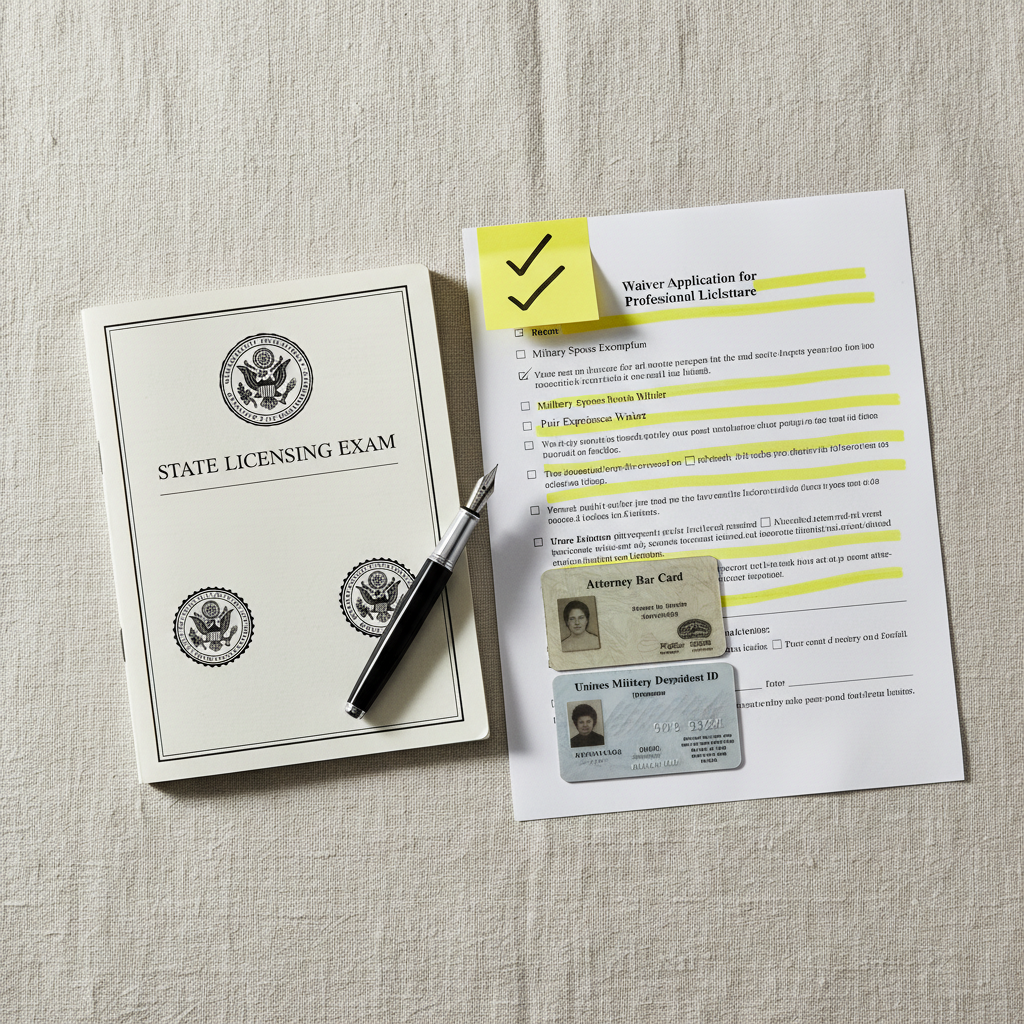
Several states let you skip the real estate licensing exam entirely if you meet specific criteria. The most common waivers apply to licensed attorneys, holders of real estate degrees, agents with 5+ years of experience in another state, and military spouses covered under federal law. Not every state offers every waiver, and the requirements vary enough that you need to check your specific state.
That’s the short answer. Below is the full breakdown of who qualifies, where, and how to actually file for it.
Attorney exemptions
If you hold an active law license, multiple states will waive part or all of the real estate exam. The logic is simple: attorneys already know contract law, property law, and agency relationships. The exam would be redundant.
States with attorney exam waivers include Colorado, Connecticut, Georgia, Indiana, Massachusetts, Montana, Nebraska, New York, Ohio, Pennsylvania, South Carolina, Tennessee, and West Virginia. The specifics vary:
- Colorado waives the entire exam for attorneys admitted to the Colorado Bar.
- Georgia waives the national portion but requires the state-specific portion.
- Massachusetts waives the exam entirely for members of the Massachusetts Bar.
- New York waives the 77-hour qualifying course but still requires the exam (so technically an education waiver, not an exam waiver).
- Pennsylvania waives the entire exam for any attorney admitted to practice in PA.
The pattern: about half these states waive everything, and the other half only waive the national portion. You still need to complete the state-specific section in those cases. Check with your state’s real estate commission before assuming you can skip the whole thing.
One catch. Most states require that your law license be active, not just “in good standing” or “inactive.” If you let your bar membership lapse, you may lose the waiver eligibility. A few states also require that you’ve actively practiced real estate law, not just that you passed the bar.
Education waivers
A handful of states waive exam requirements for candidates with college degrees in real estate or closely related fields.
- Texas will waive the pre-licensing education requirement (but not the exam) if you hold a bachelor’s degree or higher with a major in real estate from an accredited university. This can save you 180 hours of coursework.
- California accepts certain real estate courses from accredited colleges as substitutes for the DRE-approved pre-licensing courses. The exam itself isn’t waived, but the education path is shorter.
- Ohio reduces the education requirement for candidates with a four-year degree in any field. Instead of 120 hours, you need 40 hours plus the degree.
Education waivers are less common than attorney waivers, and they tend to reduce requirements rather than eliminate them entirely. If you have a real estate degree, it’s always worth checking whether your state offers a shortened path, but don’t expect to walk straight to a license without at least sitting for the exam in most cases.
Experience waivers
These are the waivers that reciprocity candidates care about most. If you’ve been a licensed agent in another state for a certain number of years, some states will waive the national portion of the exam, the education requirements, or both.
- Florida waives the national exam portion for agents with an active license from a “mutual recognition” state. You still take the 40-question Florida law exam. The eight mutual recognition states are Alabama, Arkansas, Connecticut, Georgia, Illinois, Mississippi, Nebraska, and Oklahoma.
- Colorado allows out-of-state agents with an active license to waive the exam entirely if their state has a reciprocal agreement.
- Alabama grants full reciprocity to agents from any state. Active license plus a fee. No exam.
- Indiana waives the national exam for agents with 2+ years of experience in another state. State portion still required.
The experience threshold varies. Some states want 2 years, others want 5. “Active” typically means you’ve been continuously licensed and in good standing, not just that you held a license at some point. States verify this by requesting a license history or certification from your home state.
Military spouse waivers
This is the one most people don’t know about. Under federal law and complementary state laws, military spouses who hold a professional license in one state can often receive expedited licensing or exam waivers when they PCS (move) to a new state.
As of 2026, every state has some form of military spouse licensing accommodation, though the specifics range from generous to barely functional:
- Best case states (like Texas, Colorado, and Virginia) issue a temporary license to military spouses within 30 days, allowing them to practice while their full application is processed. No exam required during the temporary period.
- Middle ground states waive the exam but still require an application, background check, and fees. Timeline: 2 to 6 weeks.
- Worst case states offer “expedited processing” of a standard application, which amounts to moving you to the front of the same line everyone else is in. You still take the exam.
The Servicemembers Civil Relief Act (SCRA) and the subsequent REAL ID Act amendments provide the federal baseline. Individual states have layered on additional protections. The Department of Defense maintains a State Licensing Resource page that lists each state’s specific military spouse provisions.
If you’re a military spouse, check that DoD resource before you start any standard licensing process. You may have a shortcut that the state’s real estate commission website doesn’t prominently advertise.
How to actually file for a waiver
The process is almost always the same:
- Apply for your license through the normal channel (state real estate commission website or paper application).
- On the application, indicate that you’re requesting a waiver. Most states have a checkbox or a separate waiver request form.
- Submit documentation: a copy of your bar card, your degree transcript, your out-of-state license certification, or your military spouse orders depending on the waiver type.
- Wait for the commission to verify and approve. Timeline: 1 to 4 weeks in most states.
Don’t assume the waiver is automatic. I’ve seen agents show up at PSI testing centers expecting to be exempted, only to find out they never filed the waiver form. Apply for the waiver first, get confirmation in writing, and then move forward with whatever remaining requirements the state asks for.
If your state doesn’t offer a waiver that applies to you, your next best option is studying for the state portion specifically. Most reciprocity candidates pass the national section easily — it’s the state-specific laws that trip people up.