Reactivating a real estate license: the "zombie" agent guide
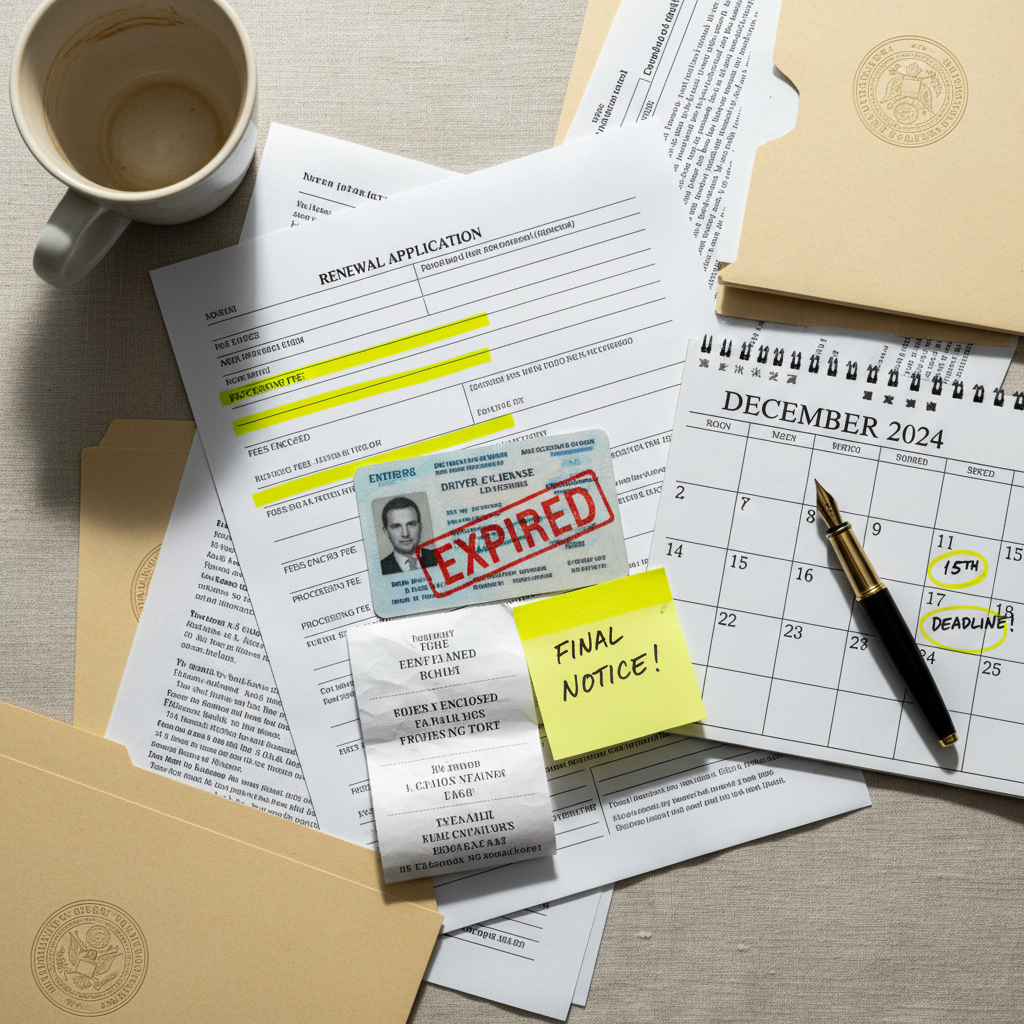
If your real estate license expired within the last 1 to 3 years, you can almost certainly reactivate it without retaking the licensing exam or completing a full pre-licensing course. The exact requirements depend on your state, but the typical path is: pay a reinstatement fee, complete some continuing education hours, and submit a reactivation application. Total cost: $200 to $600 in most states. Total time: 2 to 6 weeks.
That’s dramatically cheaper and faster than starting from scratch, which can run $1,500+ and take months between coursework and exam scheduling. The catch is timing. Wait too long and the reactivation window closes. Then you’re back to square one.
Grace periods: the clock is ticking
Most states give you a grace period after your license expires during which you can reinstate without starting the whole licensing process over. The length varies, but here’s the general pattern:
0 to 12 months expired: Most states treat this as a simple late renewal. Pay the renewal fee plus a late fee (usually $25 to $100 on top of the standard renewal), complete any CE you missed, and your license comes back to active status. This is the cheapest window.
1 to 2 years expired: The reinstatement requirements get stiffer. Most states require all delinquent CE hours plus sometimes additional “reinstatement education.” Fees increase. Some states require a new background check. But you still avoid the exam.
2 to 3 years expired: This is the edge of the cliff in most states. You can still reinstate, but the requirements start approaching what a new applicant would face. Some states require a portion of the pre-licensing education to be repeated. A few require the state exam portion (but not the national). Fees are at their highest.
3+ years expired: In most states, your license is gone. You’re treated as a new applicant: full pre-licensing education, full exam, new application, new fingerprints, the works. A few states (like Texas) extend the grace period to 6 years, and a few (like Colorado) have no fixed grace period and evaluate case by case. But the general rule is that 3 years is the line.
What CE you actually need
States require continuing education to reinstate an expired license, and the requirements fall into two buckets:
Delinquent CE — the hours you should have completed during the renewal period when your license went inactive. If your state requires 12 hours of CE per renewal cycle and you missed one cycle, you owe 12 hours. Missed two cycles? You owe 24.
Reinstatement CE — additional hours some states tack on as a penalty for letting your license lapse. This is separate from the delinquent CE. It might be a specific “reactivation course” (common in Florida, which requires a 28-hour reactivation course) or just extra general CE hours.
Here’s the thing that matters: delinquent CE and reinstatement CE are continuing education, not pre-licensing education. They’re shorter, cheaper, and available online. A typical 12-hour CE package costs $50 to $150 through providers like The CE Shop or Colibri. Compare that to a 60-hour pre-licensing course at $300 to $500.
Don’t let anyone sell you a pre-licensing course when all you need is CE. I’ve heard from agents who paid $400+ for a pre-licensing package because the education provider’s website defaulted to “New Applicant” and they didn’t realize they qualified for the much cheaper reinstatement path. Always call your state’s real estate commission first and ask exactly what’s required for reactivation at your specific expiration date.
Fees: what to budget
The total cost to reactivate breaks down like this:
| Item | Typical range |
|---|---|
| Reinstatement application fee | $50 - $200 |
| Late fee / penalty | $25 - $100 |
| Delinquent CE courses | $50 - $150 per cycle |
| Reinstatement CE (if required) | $50 - $200 |
| Background check (if required) | $40 - $75 |
| Total | $200 - $600 |
Compare that to starting over as a new applicant:
| Item | Typical range |
|---|---|
| Pre-licensing education | $300 - $600 |
| Exam fee | $50 - $100 |
| Application fee | $100 - $300 |
| Background check / fingerprints | $40 - $100 |
| Total | $500 - $1,100+ |
And that’s before you account for the time cost. Pre-licensing courses run 60 to 180 hours depending on the state. Even at a self-paced online speed, you’re looking at 2 to 4 weeks of study time. CE reinstatement courses take 1 to 3 days.
The “save or scrap” decision framework
Not every expired license is worth reactivating. Here’s how I’d think about it.
Reactivate if:
- Your license expired less than 2 years ago
- Your state’s grace period still applies
- You plan to actively use the license within the next 6 months
- Total reinstatement cost is under $500
- You don’t have any disciplinary history that would complicate reactivation
Start over if:
- Your license has been expired for 3+ years and your state’s grace period has closed
- Your state requires you to repeat a significant portion of pre-licensing education anyway (at that point, the cost savings of reinstatement disappear)
- You’re switching to a different state and that state doesn’t honor your expired license for reciprocity purposes
- You have a disciplinary history on the old license that would follow you into reactivation but could be avoided with a fresh application (rare, but it happens)
Don’t bother with either if:
- You’re considering a license “just in case” with no active plans to use it
- The total cost of maintaining the license (annual renewal fees, CE costs, E&O insurance) exceeds the income you’d realistically earn from it
That last point is worth sitting with. A real estate license in an idle state costs $200 to $400 per year to maintain between renewal fees and mandatory CE. If you’re not closing deals there, that’s money walking out the door.
How to file: the actual steps
-
Call your state’s real estate commission. Not email — call. Ask specifically: “My license expired on [date]. What do I need to do to reinstate?” Get the answer in writing (ask them to email it to you or point you to the specific page on their website). State commission staff deal with this question daily and can tell you exactly what’s required in 5 minutes.
-
Complete any required CE. Do this before you submit your reactivation application. Most states won’t process the application until CE is verified as complete. Use an approved online provider for the fastest turnaround. Verify the provider reports completion to your state electronically — some only provide a certificate that you then have to upload manually.
-
Submit the reactivation application. Most states have a specific “reinstatement” or “reactivation” form, separate from the standard renewal form and the new applicant form. Use the right form. The wrong form will get kicked back and cost you weeks.
-
Pay all fees. Reinstatement fee, late fees, any delinquent renewal fees. Some states let you pay online with the application. Others require a cashier’s check. (Yes, in 2026, some states still require cashier’s checks. Don’t ask me to explain it.)
-
Affiliate with a broker. In most states, your license can’t go active without a sponsoring broker. If you left your previous brokerage, you’ll need to line up a new one before or immediately after your reactivation is approved. Some states give you 30 to 90 days to affiliate after reinstatement. Others require broker affiliation as part of the reinstatement application.
If your license is expired in one state and you’re actually planning to work in a different state, check whether the new state offers reciprocity before reactivating the old one. Some states accept expired licenses from other states as proof of prior licensure for reciprocity purposes. Others require the license to be active. Knowing this can save you the cost of reactivating a license you don’t actually need.