Leaving real estate for insurance: the post-NAR pivot guide
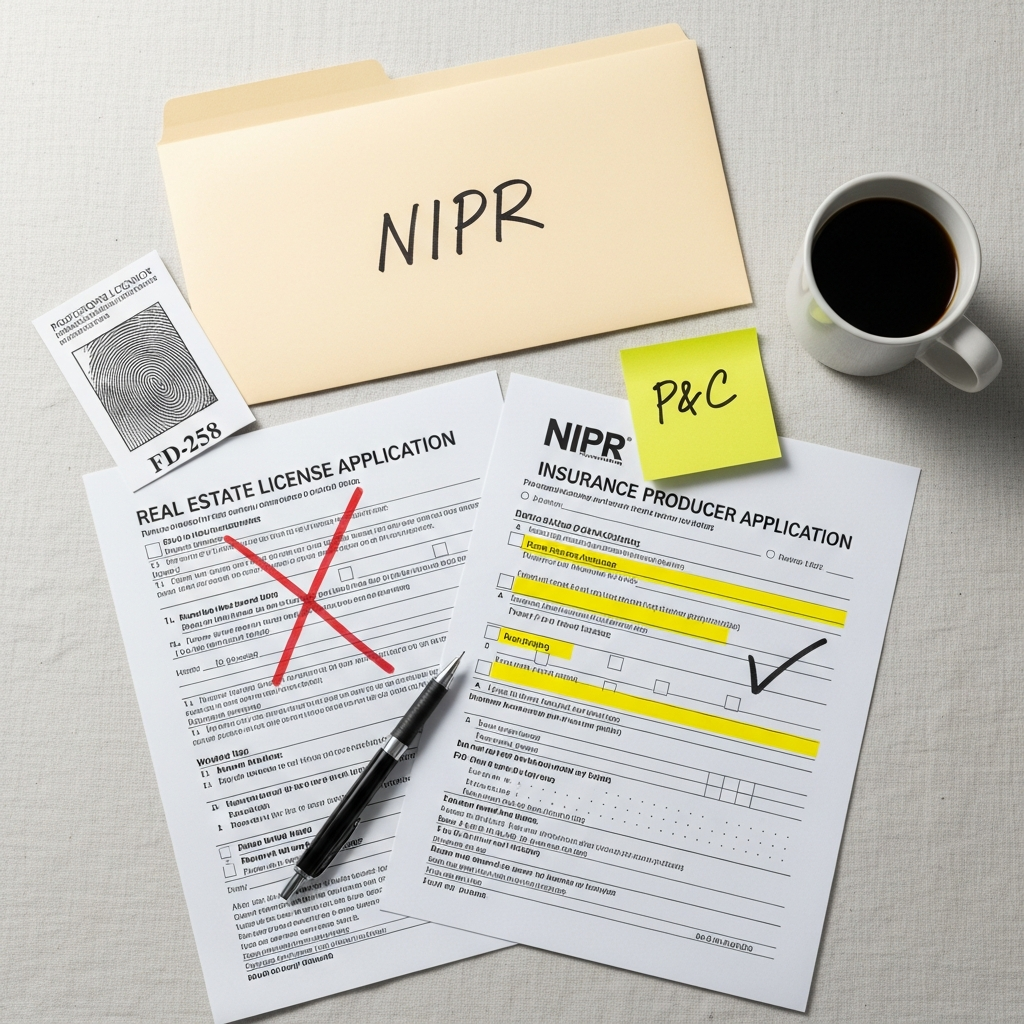
You can get an insurance license in most states for $200-$600 and start earning residual commissions within weeks. Compare that to the $1,000-$3,000+ you spent on real estate licensing, the annual NAR/MLS/board dues bleeding your account, and the fact that every dollar you earn disappears the moment transactions dry up. Insurance isn’t a magic escape hatch from the post-NAR mess, but the math is worth understanding before you make any moves.
Since the August 2024 NAR settlement, roughly 150,000 agents have left the business. NAR membership peaked at 1.6 million in October 2022 and is projected to hit 1.2 million by 2026. That’s a 25% decline. If you’re reading this, you’re probably one of the agents wondering whether to stick it out or pivot.
This guide breaks down exactly what the transition looks like: what insurance licensing costs, what you’ll earn, what skills transfer, and the mistakes that sink 90% of new insurance agents within three years.
The NAR settlement didn’t kill commissions, but it changed who pays
The commission rates themselves haven’t collapsed. Redfin data shows buyer-agent commissions dipped to 2.36% in Q3 2024 (right after the settlement took effect) but recovered to 2.43% by Q2 2025 — basically back to pre-settlement levels.
So why are agents leaving?
The structural shift matters more than the rate itself. Buyer’s agents now need signed representation agreements before showing a single house. They have to justify their fee upfront, in writing, to someone who just wants to look at kitchens on a Saturday. Some agents handle this well. Many don’t.
The Federal Reserve published an analysis in May 2025 confirming that buyer agreements haven’t actually driven commission rates down. But the psychological impact is real: agents who built their careers on the assumption that the seller’s side would cover their commission are now having conversations they’ve never had before. And the agents who can’t have that conversation gracefully are the ones leaving.
Meanwhile, NAR’s own data shows the median agent made $58,100 in 2024. Agents with two years or less experience? A median of $8,100. That’s not a typo.
What insurance licensing actually costs (spoiler: less than your MLS dues)
Here’s the part that surprises most real estate agents. Getting an insurance license is cheaper and faster than what you already went through for RE.
Total cost: $200 to $600 in most states. That covers pre-licensing education (if your state requires it), the exam fee ($50-$150), and the license application ($50-$200).
Timeline: As fast as 2-4 weeks in states like Texas, Pennsylvania, and Arizona that have eliminated pre-licensing education requirements entirely. In states with moderate requirements (20 hours of coursework), plan for 3-6 weeks. Florida is the outlier at 200 hours of pre-licensing, which takes 2-3 months.
The trend is in your favor. States are actively reducing barriers. California dropped from 52 hours of pre-licensing to just 12 hours as of January 2026. Pennsylvania eliminated the requirement altogether in April 2025. The industry is moving toward exam-only gatekeeping.
Compare that to your real estate licensing experience: $1,000-$3,000+ in education, exam, broker sponsorship, plus $1,500-$3,000 in annual NAR, MLS, and board dues just to keep the lights on. Insurance license renewal runs $100-$300 per year.
Which license type to get first
You’ll choose between Property & Casualty (P&C) and Life & Health (L&H) — or both.
P&C is the natural fit for real estate agents. You already understand homeownership, property risks, and the buying process. P&C lets you sell homeowners insurance, auto, commercial property, and liability coverage. Every past buyer in your CRM is a potential homeowners insurance client.
Life & Health pays higher upfront commissions. Life insurance commissions run 40-120% of the first-year premium. That’s a different world from the 2.5-3% you’re used to in RE. But the sales process is different — you’re selling a product people need but don’t want to think about, rather than something they’re actively shopping for.
Get both if you can. The combined P&C + Life & Health license gives you the broadest offering. Sell the house, write the homeowners policy, and offer life insurance in the same conversation. More on the legal considerations of that later.
The income math: transactional vs. residual
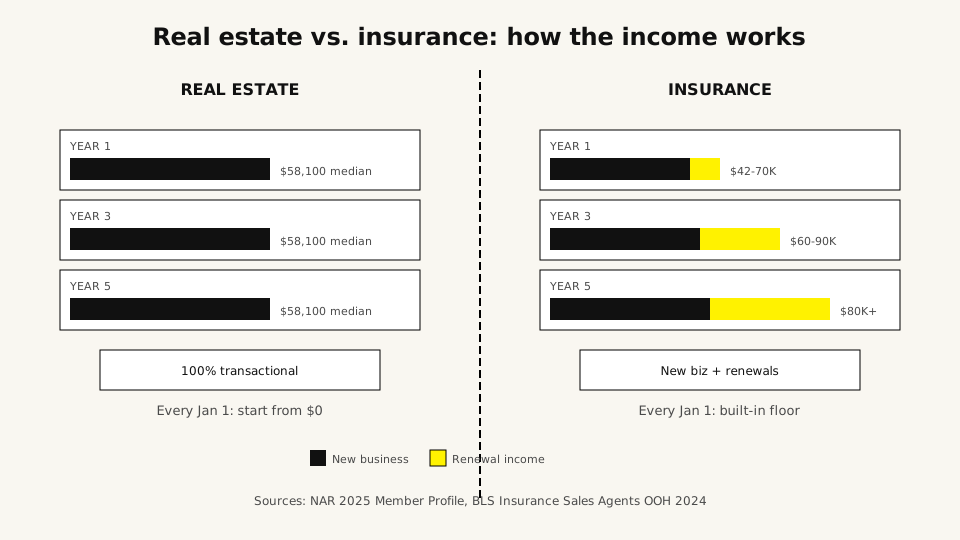
This is the real reason insurance is worth considering. Not because the median income is higher (it’s close — $60,370 for insurance vs. $58,100 for RE), but because of how the money works.
Real estate income is 100% transactional. You close a deal, you get paid. You don’t close a deal, you eat ramen. There is zero residual income. Every January 1st, you start from zero.
Insurance income compounds. You earn upfront commissions on new policies, but you also earn 5-20% renewal commissions every time a client’s policy renews. As long as they keep paying premiums, you keep earning. By year three to five, renewal commissions typically represent 30-50% of your total income.
Think about what that means. After a few years of selling insurance, you wake up on January 1st with a baseline income already built in. You’re not starting from zero. You’re starting from a floor that grows every year.
First-year income expectations (be honest with yourself)
| Model | Conservative | Average | Top performer |
|---|---|---|---|
| Captive agent (W-2) | $42,000-$55,000 | $55,000-$70,000 | $75,000-$95,000 |
| Draw against commission | $35,000-$48,000 | $50,000-$65,000 | $70,000-$110,000 |
| Independent (pure commission) | $30,000-$45,000 | $48,000-$70,000 | $85,000-$150,000+ |
The first 3-6 months will be lean. Full-time income typically develops by months 8-12. If you’re making $60,000+ in real estate right now, do not walk away from that income stream without a plan. More on that below.
Your real estate skills are worth more than you think
The good news: you’re not starting from scratch. The skills that make a good real estate agent are the same skills that make a good insurance producer.
Your client database is gold. This is the single biggest advantage you carry into insurance. Every past buyer needs homeowners insurance. Every past seller needs a policy on their next home. Investment property clients need landlord coverage. You already have their trust and their phone number.
Sales is sales. Prospecting, lead generation, referral networks, negotiation, handling objections — you’ve been doing all of it. The product changes, but the muscle memory doesn’t.
You already understand compliance. CE requirements, licensing renewals, disclosure rules, fiduciary-adjacent duties — the regulatory overhead of insurance will feel familiar, not foreign.
Local market knowledge transfers. You know which neighborhoods flood, which zip codes have wildfire risk, which areas have aging roofs. That knowledge is directly relevant to P&C underwriting and client advising.
The work-life balance shift is real too. Insurance hours can be more predictable than real estate. No weekend open houses. No evening showings. The hustle exists early on, but once your book of business is established, the rhythm is steadier.
NIPR makes multi-state licensing absurdly easy (compared to RE)
If you’ve ever tried to get a real estate license in a second state, you know the pain. Separate applications, different education requirements, inconsistent reciprocity rules, and the headache we cover extensively in our real estate reciprocity guide.
Insurance is a different world. The National Insurance Producer Registry (NIPR) provides a single online portal for applying in every state. You get one National Producer Number (NPN). You submit one application. You pay electronically. Once you’re licensed in your home state, adding non-resident licenses in other states is straightforward — often requiring no additional exam.
We’ve also written a guide to which states participate in the insurance license compact. The short version: multi-state insurance licensing is what multi-state real estate licensing should have been all along.
For a detailed breakdown of how non-resident insurance licensing works, read our non-resident insurance licensing playbook.
The dual-license play: sell the house and write the policy
You don’t have to choose one or the other. In virtually every state, you can hold both a real estate license and an insurance license simultaneously. There’s no law against it.
The cross-sell opportunity is obvious: you close a home sale, and the buyer needs homeowners insurance before the lender will fund the loan. If you’re licensed to write that policy, you capture two revenue streams from one relationship. Add umbrella coverage and life insurance, and you’ve built a three-legged income stool from a single transaction.
The legal guardrails you need to know:
- RESPA compliance: You cannot receive kickbacks or referral fees for steering clients to settlement service providers. But if you’re a licensed insurance agent providing legitimate insurance services, you’re not “referring” — you’re serving. That’s generally compliant, but you must disclose the dual relationship.
- Conflict of interest disclosure: Tell your clients you’re licensed in both fields. Transparency protects you.
- Brokerage policies: Some RE brokerages have rules about agents conducting non-RE business. Check before you start quoting policies from your desk at the brokerage.
This is the strategy we explore in depth in our dual-licensing guide. The takeaway: keeping your RE license while adding insurance isn’t just allowed — it’s often the smartest move.
The mistakes that kill 90% of new insurance agents
This is the number I need you to internalize: 90% of new insurance agents quit within three years. Thirty percent quit within 90 days.
Those aren’t scare tactics. That’s industry data from Kaplan Financial, and it tracks with what agents report on insurance forums. Here’s what goes wrong:
Going all-in too fast. The consensus on insurance forums is unanimous: don’t quit real estate to go full-time insurance. Build the insurance practice in parallel. Keep your RE license active, keep closing deals, and grow the insurance book on the side until it can support you. One forum poster put it simply: “Don’t leave RE… work parallel.”
Expecting to replace RE income immediately. Insurance income ramps over 6-12 months. The first 3-6 months are typically lean. If you’re used to $5,000-$10,000 commission checks from RE closings, the $200-$500 insurance commissions early on will feel like a step backward. They are, temporarily. The compounding kicks in later.
Choosing the wrong model. Captive agencies (State Farm, Allstate, Farmers) offer training, leads, and sometimes a base salary. They’re the safest entry point. Independent agencies pay higher commissions but require you to generate your own leads and build your own infrastructure — which is basically the same hustle you’re trying to escape in RE. Don’t go independent until you know the insurance business.
Mining your database without building new channels. Yes, your existing client list is your biggest asset. But if you only sell insurance to people you already know, you’ll run out of prospects in 6-12 months. Build digital marketing, referral partnerships, and prospecting systems from day one.
Underestimating the exam. P&C exam pass rates average 50-60% nationally. This is not a rubber-stamp test. The concepts — liability, casualty, underwriting, policy language — are different from anything you studied for your real estate exam. Budget 2-4 weeks of serious study time.
The fastest states to get insurance-licensed
If you’re ready to move, here’s where the barrier to entry is lowest.
No pre-licensing education required:
- Texas — Exam only. One of the fastest paths in the country.
- Pennsylvania — Eliminated pre-licensing as of April 2025.
- Arizona — No pre-exam training. Also easy for nonresidents.
- Washington, D.C. — No pre-exam training. No fingerprinting.
Reduced requirements (12-20 hours):
- California — Dropped from 52 to 12 hours in January 2026.
- Kentucky, North Carolina, Wisconsin — 20 hours each.
The tough ones:
- New York — 90 hours for P&C. But there’s a work-experience exemption: if you have 1+ year working at a NY-licensed insurance agency, you can skip the exam entirely.
- Florida — 200 hours for a General Lines license. No shortcuts.
For life insurance specifically, we’ve written a state-by-state breakdown of selling life insurance in another state that covers costs and requirements.
Your 90-day transition checklist
Don’t overthink this. Here’s the sequence:
Week 1-2: Decide which line of authority to pursue first (P&C recommended for RE agents). Check your state’s pre-licensing requirements. Sign up for exam prep if needed.
Week 3-4: Complete pre-licensing education (if required). Schedule your exam. Study hard — remember, 40-50% of first-time P&C test-takers fail.
Week 4-6: Pass the exam. Submit your license application. While you wait for approval, start learning carriers and products. Research whether you want to start captive or independent.
Week 6-8: Receive your license. If going captive, interview agencies. If going independent, identify your first 2-3 carrier appointments. Start reaching out to your existing database — not with a hard sell, but with a “hey, I can help with your homeowners policy now too” message.
Week 8-12: Write your first policies. Keep your real estate license active. Track your insurance pipeline alongside your RE pipeline. Don’t quit RE until insurance income consistently covers at least 50% of your expenses.
Do not close any doors behind you. The agents who survive in insurance are the ones who built it as an addition to their practice before making it their primary income.
The bottom line on the pivot
Insurance isn’t the promised land. Ninety percent of new agents fail, the exam is real, and the first year will pay less than you want. But the structural advantages — residual income, lower overhead, recession resistance, and streamlined multi-state licensing — are legitimate.
If the NAR settlement has you questioning whether buyer representation agreements and commission negotiations are worth the fight, insurance gives you a way to diversify without starting from zero. Your sales skills transfer. Your client list transfers. Your hustle transfers.
Your next move: check your state’s insurance licensing requirements, budget $200-$600 and 2-6 weeks of study time, and take the exam while you’re still closing real estate deals. Build the insurance book in parallel. See how it feels. Then decide.
If you’re also weighing mortgage lending as an alternative, read our real estate license vs. MLO comparison for the full breakdown on that career path.